Study 4-Year Medicine: 1.5 Year on Campus and 2 Years UK/USA Clinical Rotations
Open days
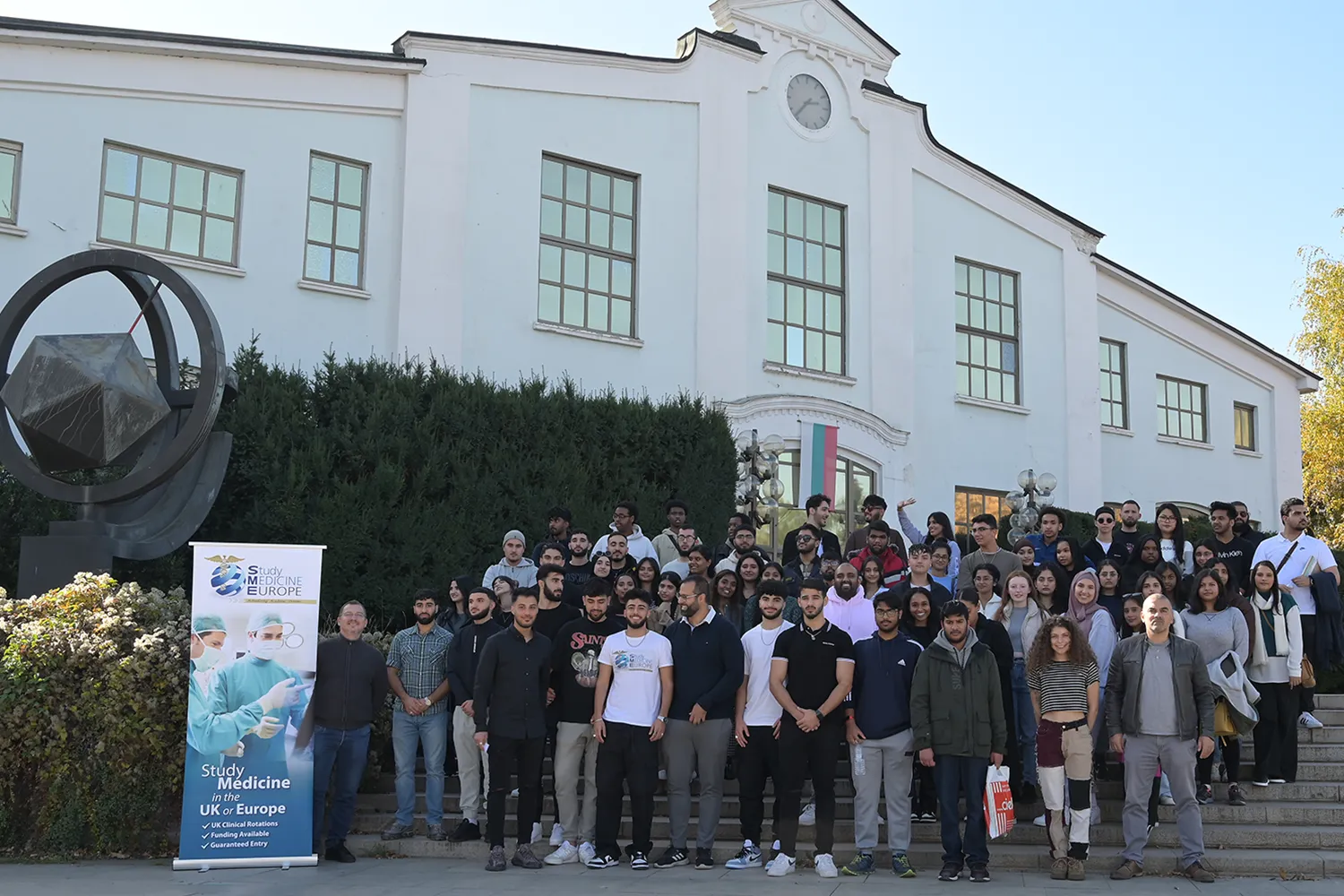
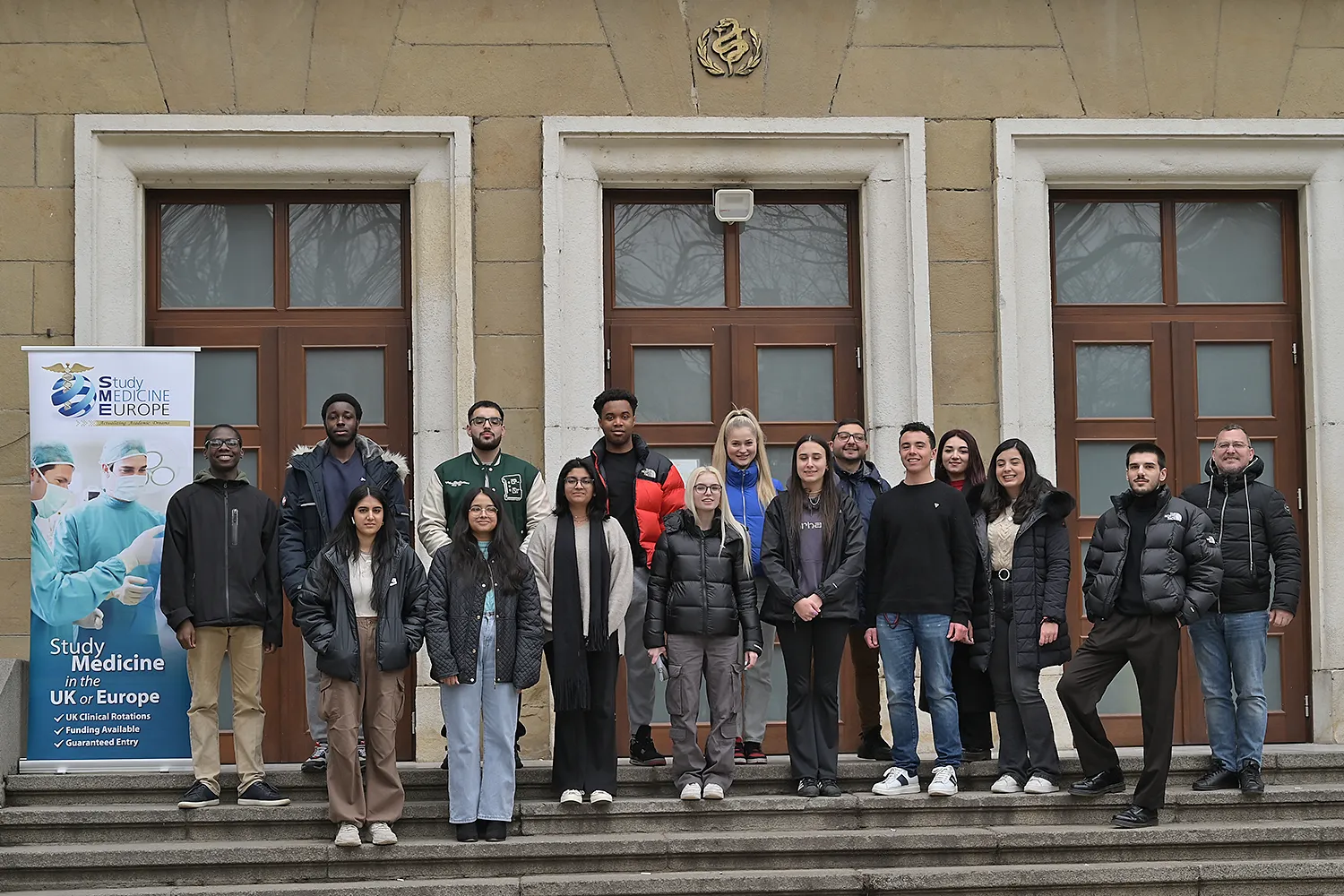
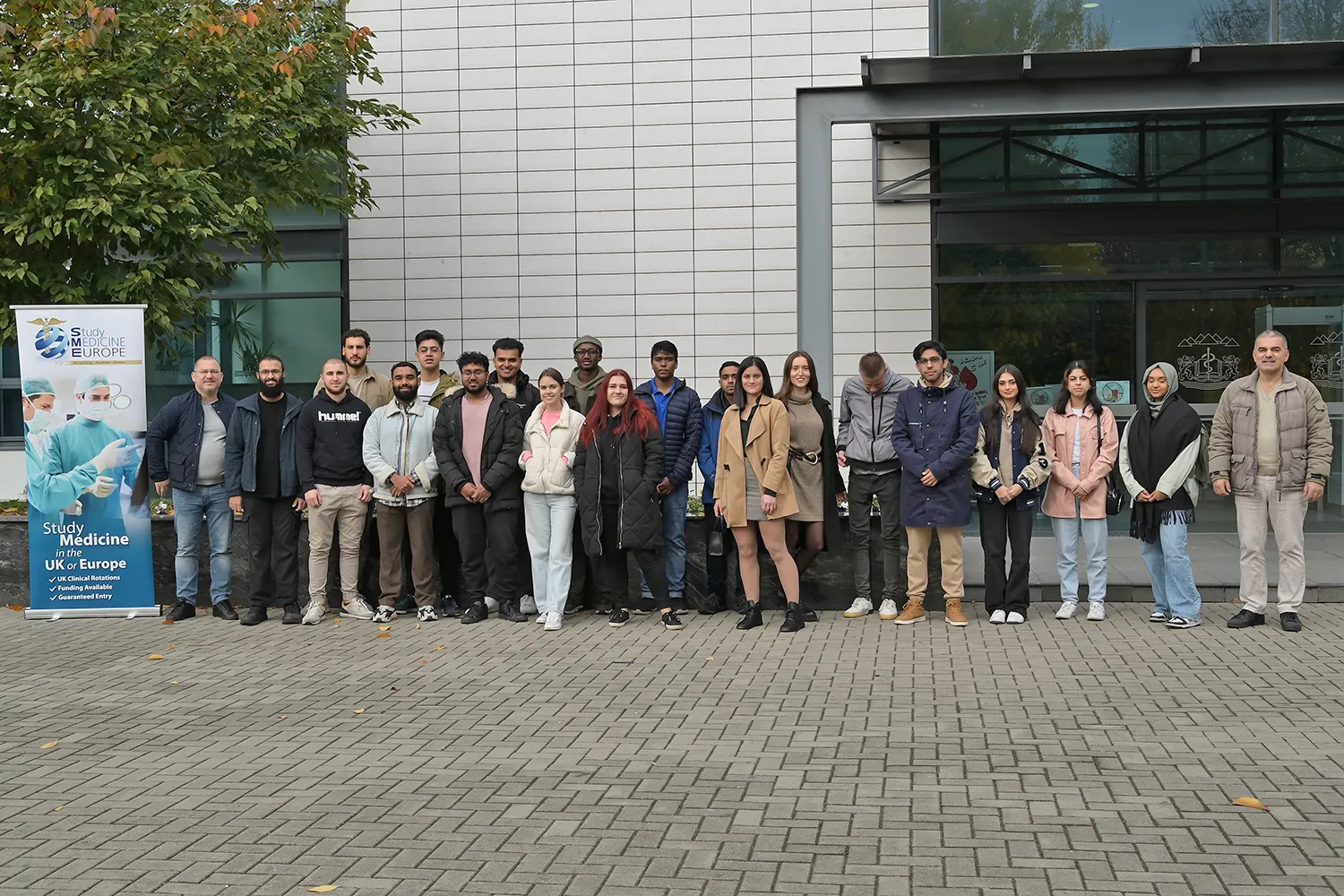
Join Our Open Days
Study Medicine Europe Open days

Study Medicine

STUDY IN EUROPE

6 Years Abroad

ADMISSION

Biology/Chemistry exams

UNDERGRADUATE ENTRY

6 years

GRADUATE ENTRY

Not Available

INTAKE

September, March

ONLINE OPTION

Available

CLINICAL ROTATIONS

European Hospitals

MD Program
Preclinicals

4 Years

On-Campus

MD Program
Clinicals

2 Years in

European Hospitals

STUDY IN NORTH AMERICA

1.5 Years Abroad

ADMISSION

No exams

UNDERGRADUATE ENTRY

5 years

GRADUATE ENTRY

4 Years

INTAKE

January, May, September

ONLINE OPTION

Available

CLINICAL ROTATIONS

UK/USA Hospitals

Premed Program
(if required)

1 Year

Online

MD Program
Basic Sciences

1,5 Years

On-Campus

MD Program
Clinical Sciences

2 Years in

UK/USA Hospitals

do you meet the requirements?

Q&A

UNIVERSITIES EUROPE

Read More
  • Studying medicine in Greece is an exceptional pathway for pursuing a medicine qualification with local Universities in the region offer a global medicine programme taught entirely in English.
  • With over 2,500 years of medical research and knowledge acquisition, Greece sets the precedent for medical training and is a pioneering leader in physician training and medical practice.
  • Aristotle University of Thessaloniki, National & Kapodistrian University of Athens and University of Crete offer a 6-Year Medicine Programme that comprehensively equips students to practice medicine.
  • The university was founded in 1942 in line with the ethos of Hippocrates (often referred to as the ‘Father of Medicine’) and it has been ranked in the top 100 of the global ranking list of Medical Schools.
  • Degrees are awarded in accordance with the EU Directive 2005/36/E, so students can practice medicine in all EU countries without having to sit for any conversion exams and, any other country around the world.
Read More
Read More
  • Armenian medical universities are internationally-accredited and are regarded as some of the finest within Europe.
  • Universities in Armenia are now taking in more local and international students than ever before. For example, last year, more than 5,000 international students studied medicine or dentistry in English.
  • Medical studies in the UK, the USA and Canada can be very expensive with students accumulating significant financial debts due to large loans. This is in stark contrast to Armenia where the cost of living and study is much lower.
  • Students looking to study medicine in Armenia may apply to the University of Traditional Medicine in Yerevan that is offering a 6-Year Medicine Programme.
  • Following the programme, graduates can specialise in their own country as their internationally-recognised degree offers them global opportunities.
Read More
  • Home to some of the finest medical universities in Europe, Romania offers internationally accredited degrees that are recognised worldwide.
  • Medical programmes offered by Romanian universities are listed in renowned directories of international medical schools, such as the WDMS (World Directory of Medical Schools).
  • The Medicine course lasts for six years and is taught entirely in English with graduates being qualified with an MD degree.
  • Study medicine in Romania at: Grigore T. Popa University and “Vasile Goldis” Western University of Arad.
  • All qualifications are recognised globally allowing graduates to practise in any EU member state or anywhere around the world.
Read More
  • Serbia’s renowned universities have an established history of world-class medicine training.
  • The University of Belgrade was founded in 1808 and is the oldest and largest modern university in Serbia. Recently, it was ranked #231 in Global Universities rankings.
  • It offers a 6-Year Undergraduate Medicine in English that is comprised of 2 years of pre-clinical studies, 3 years of clinical studies and one year internship.
  • Serbian university graduates currently practise medicine throughout the world and are currently working in the United Kingdom, Australia, Canada, the United States of America, and various other countries.
Read More
  • Prestigious medical education in Kyiv, ranked among Ukraine’s top medical universities
  • International exchanges, conferences, and scientific projects for global experience
  • Sports and extracurricular activities to keep students active and balanced
Read More
  • Earn a globally recognised medical degree in English, opening doors worldwide.
  • Learn from experienced professors and medical professionals with real-world expertise.
  • Gain hands-on clinical training in top hospitals across Malta and Europe.
  • Study at Medicampus Europeo – University of Malta, with modern labs, simulation tools, and advanced classrooms.
Read More
  • Prospective medical students from all over the world can apply for programs in medicine taught entirely in English.
  • Candidates are not required to sit entrance exams and must complete application documents for the following:
    1. An application which includes the following details: bio, education history and course for which you are applying.
    2. A copy of your secondary education results with subjects studied.
    3. Two small photos of 4-5cm.
  • Studying medicine in North America sets up students for an international medical career and a Doctor
    of Medicine (MD) qualification.
  • North American medical schools in the Caribbean islands are established learning communities built around multicultural
    faculty and students giving prospective applicants an enriching learning experience.
  • International students can find the right program for their preferences and learning styles from a
    range of diverse universities with competitive classes and a curriculum of basic sciences and
    clinical sciences.
  • North America is the centre of the world’s medical services, research, and innovation, giving
    students extensive opportunities for training in cutting-edge settings while studying.
  • Medical universities in North America are listed in the Federation for Advancement of International
    Medical Education and Research (FAIMER), Association for Medical Education in Europe (AMEE), and the World Federation for Medical Education (WFME).
  • Medical schools in the North America region include Caribbean countries such as Anguilla, Antigua
    and Barbuda, Barbados, and St. Vincent and the Grenadines.
  • New Anglia University (NAU) offers students a 5-Year Undergraduate Premedical and MD
    Program.
  • The NAU program is studied in Anguilla and graduates are qualified with a Doctor of
    Medicine (MD) degree.
  • NAU is a leading North American university with a curriculum developed in line with U.S.
    and British medical schools including offering international clinical rotations.
  • This program is studied over five years with a structure of: one year of Premedical
    modules, two years of Basic Sciences, and, two years of Clinical Sciences.
  • 5-Year Undergraduate Program:
    • The Premedical year is a 90-credit foundation program studied for 45 weeks;
      there are three terms studying modules with natural sciences, mathematics, and
      social sciences coursework.
    • The MD Program is 75 weeks of Basic Sciences modules studied over two years,
      then 72 weeks of Clinical Sciences studied as 48 weeks of Core Rotations and 24
      weeks of Elective Rotations.
    • Undergraduate students undertake clinical rotations in British hospitals
      and clinics.

Read More

  • Saint James School of Medicine (SJSM) offers undergraduate students a 5.5-Year Program for a Doctor of Medicine (MD) degree.
  • SJSM is one of North America’s leading medical schools with a modern campus in St. Vincent and the Grenadines.
  • The SJSM undergraduate program is studied over 5.5 years with three trimesters per year: the PreMedical Program, then Basic Sciences, and then Clinical Sciences.
  • 5.5-Year Undergraduate Program:
    • The Pre-Med Program is studied for 16 months and covers premedical modules consistent with U.S. medical schools.
    • After the Pre-Med modules, students transition to the Basic Sciences with foundation modules studied for 16 months.
    • Clinical Sciences is structured into 80 weeks of modules with five semesters of clinical rotations. Firstly, there are 48 weeks of core clerkships, then 32 weeks of elective clinical rotations.
    • SJSM students complete clinical rotations in U.S. hospitals and clinics.
Read More
  • Victoria University of Barbados (VUB) offers a 5-Year Undergraduate Medicine Programme that qualifies students with a Doctor of Medicine (MD) degree.
  • Students studying at VUB learn on the modern medical school campus in Barbados and the curriculum is in line with U.S. programmes.
  • The undergraduate VUB programme is structured into a Pre-Medical programme for one year, Basic Sciences for two years, and Clinical Sciences for two years.
  • 5-Year Undergraduate Programme:
    • VUB Pre-Medical modules are a Basic Foundation for Medical Sciences covering Physics, Chemistry, and Biology in preparation for Basic and Clinical Sciences.
    • Following this, Basic Sciences are studied for two years with 84 weeks of theory modules including Anatomy, Physiology, and Diagnosis.
    • Lastly, Clinical Sciences are studied for the final two years with 88 weeks of rotations; firstly, 60 weeks of Core Rotations, then 28 weeks of Elective Rotations.
Read More
  • New Anglia University (NAU) offers students a 4-Year Graduate Medicine Program.
  • Graduates study all modules and clinical rotations in English in Anguilla and are qualified with a Doctor of Medicine (MD) degree.
  • The NAU 4-Year Graduate Program:
    • Candidates with a science-related Bachelor’s Degree are eligible for the NAU Graduate Medicine Pro-gram.
    • The graduate medicine program is structured into two years of Basic Sciences, then two of Clinical Sciences.
    • Students study 75 weeks of theoretical modules, then progress to 72 weeks of Clinical Rotations with Core Rotations for 48 weeks, and Elective Rotations for 24 weeks.
    • Graduate students undertake clinical rotations in British hospitals and clinics.

Read More

  • Saint James School of Medicine (SJSM) offers a 4-Year Medicine Programme that qualifies graduates with a Doctor of Medicine (MD) degree.
  • SJSM is a leading medical school in North America, with medical training on a new Caribbean campus in St. Vincent and the Grenadines.
  • The 4-Year medicine programme is structured into 10 semesters of four phases of study: the first two years of Basic Sciences consists of 84 weeks of modules (six terms); then, two final years of Clinical Rotations that consists of 80 weeks of Core Rotations and Elective Rotations.
  • The two years of clinical rotations are completed in the U.S. or in Suriname’s affiliate teaching hospitals with all modules consistent with U.S. medical schools’ clinical sciences.
  • SJSM is highly regarded for its inclusive culture and its experienced faculty who teach with a supportive low student-to-professor ratios.
Read More
  • Victoria
    University of Barbados (VUB)
    offers a 4-Year Medicine Program and graduates
    hold a Doctor of Medicine (MD) degree.
  • The VUB curriculum is in line with international medical schools and students study on a
    modern university campus in Barbados.
  • The 4-Year medicine program is structured into: two years of Basic Sciences, with 84
    weeks of modules (six terms); then, two years of Clinical Rotations with 88 weeks of
    Core and Elective Rotations.
  • The two years of clinical rotations are studied in Barbados in state-of-the-art
    hospitals for all core rotations and elective rotations with experienced international
    professors and clinicians.
  • VUB students may study the first two years of the program’s Basic Sciences online.

Read More

  • Medical students in North America can complete up to two years of clinical rotations in hospitals across the UK, USA,
    and Canada.
  • These rotations take place during the clinical years of the medical program (typically Years 3 and 4).

Core Clinical Rotations

Students are required to complete core rotations in the following disciplines: Internal Medicine, General
Surgery, Obstetrics and Gynecology, Pediatrics, Psychiatry, Family Medicine.

Elective Clinical Rotations

  • Students may also select elective rotations in a wide range of medical and surgical subspecialties.
  • Electives vary by hospital but commonly include: Cardiology, Neurology, Dermatology, Orthopaedics, Emergency
    Medicine, Radiology, Anesthesiology.

Benefits of International Rotations

  • Gain clinical experience in diverse healthcare systems and settings.
  • Develop adaptability and global competencies in patient care.
  • Strengthen applications for:

    • Residency programs in the USA (USMLE track)
    • Foundation Program (UK track)
  • Build a professional network across multiple countries.
  • Prepare for a global medical career with internationally recognised training.

UNIVERSITIES
N. AMERICA

OUR STUDENTS

Callback Request